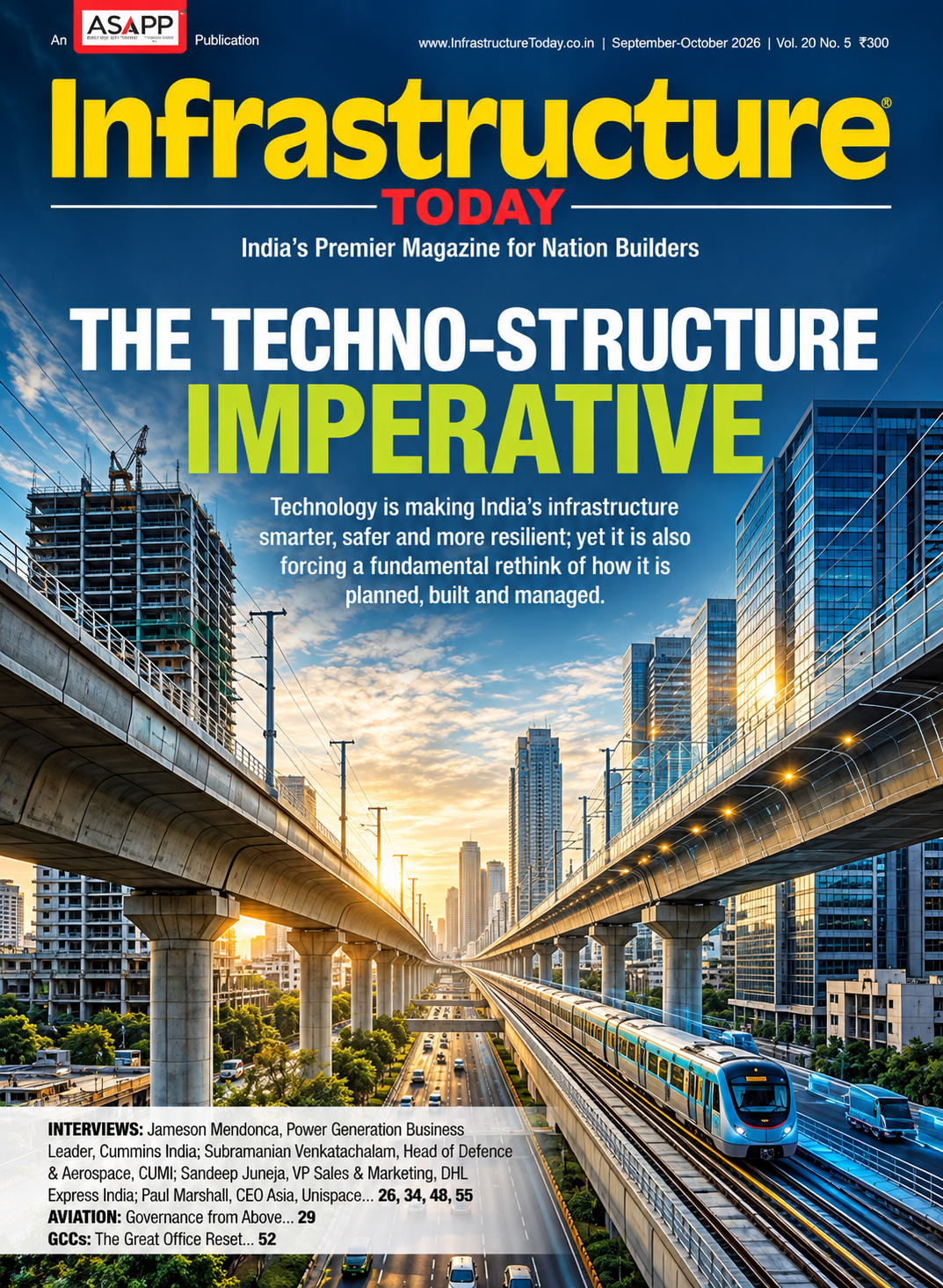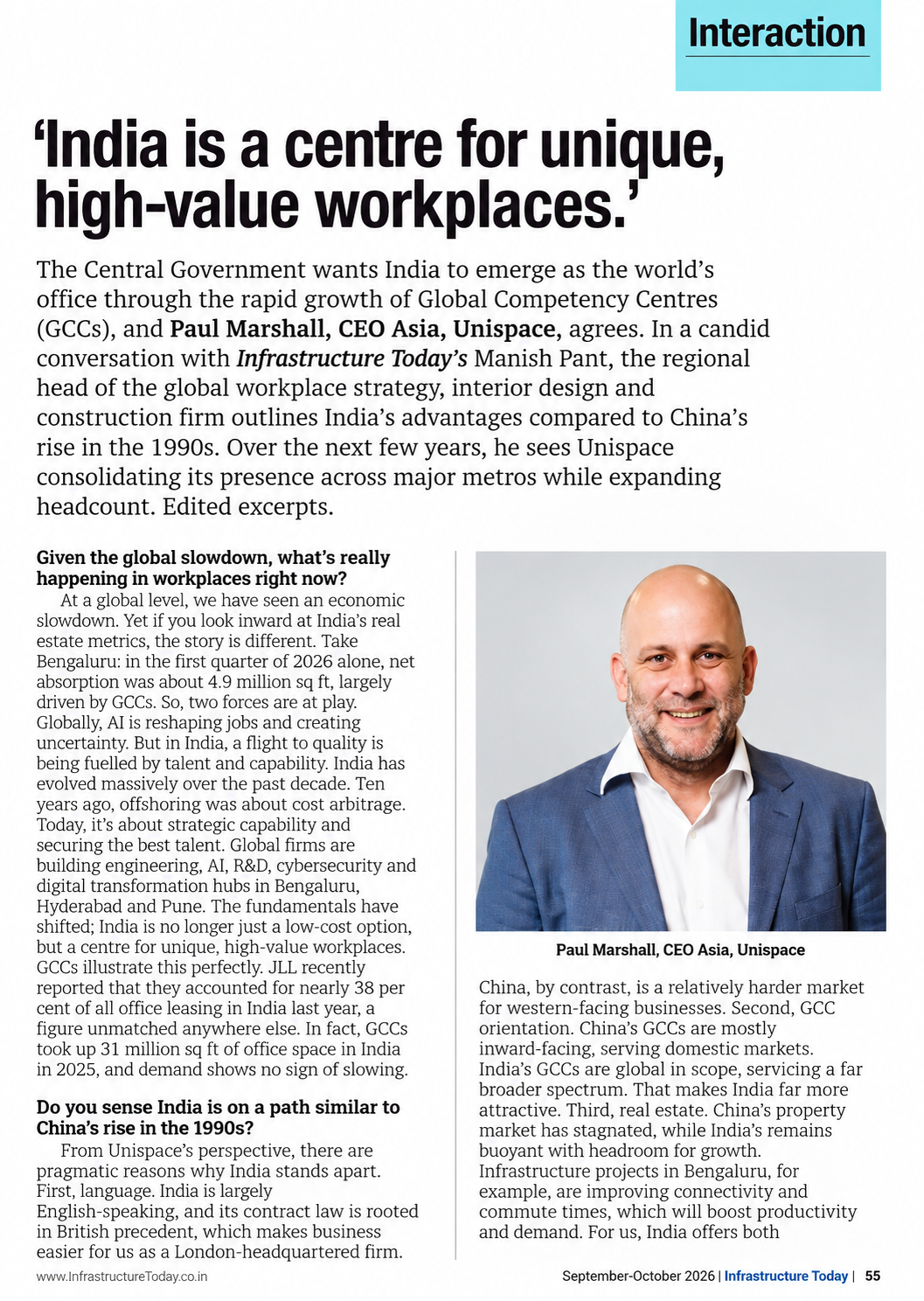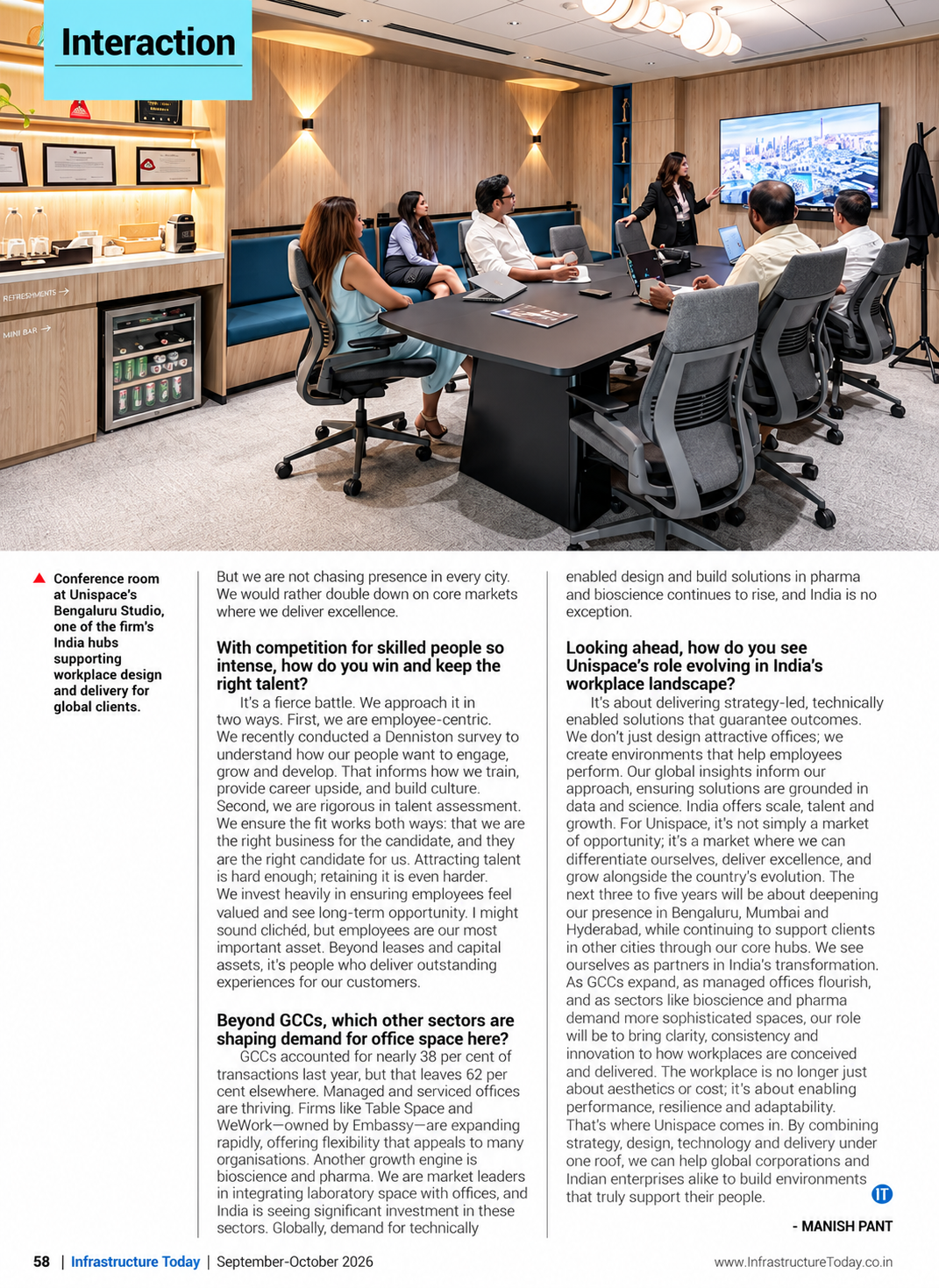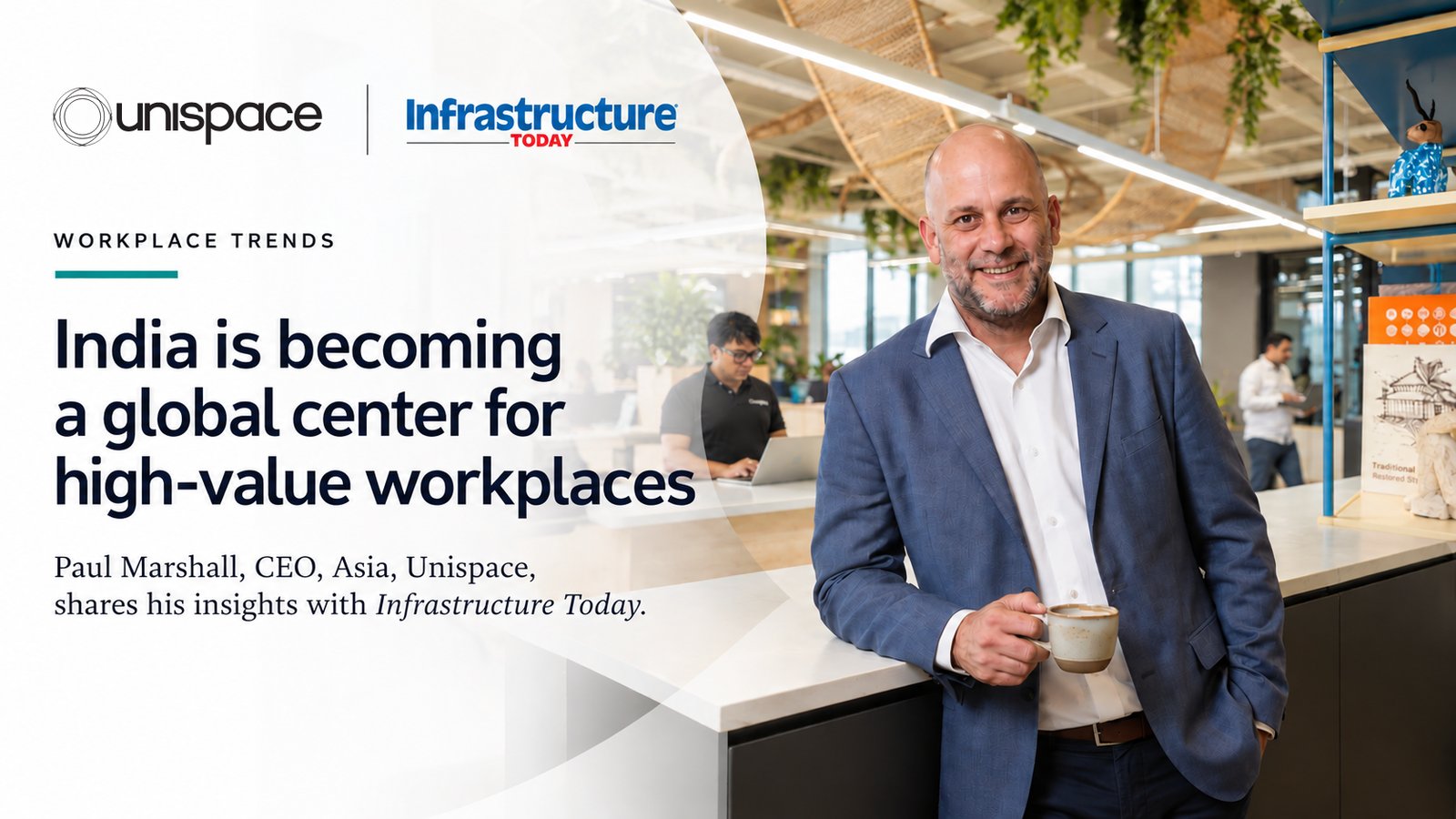
Paul Marshall, CEO, Asia at Unispace, discusses India's growing Global Capability Centre market, changing workplace expectations, and how Unispace is supporting clients as demand for more sophisticated workplaces increases.
India's office market continues to grow despite a wider global economic slowdown. In the first quarter of 2026, Bengaluru recorded approximately 4.9 million sq ft of net office absorption, driven largely by Global Capability Centres (GCCs).
For international businesses, India's appeal has changed. Companies once established operations in the country primarily to reduce costs. Today, they are investing in specialist talent, research and development, engineering, artificial intelligence (AI), and digital capabilities.
In a recent interview with Manish Pant, Consulting Editor of Infrastructure Today, Paul Marshall, CEO, Asia at Unispace, shared his perspective on India's workplace market, the opportunities for global businesses, and Unispace's plans for continued growth.
India's GCC market is driving demand for quality workplaces
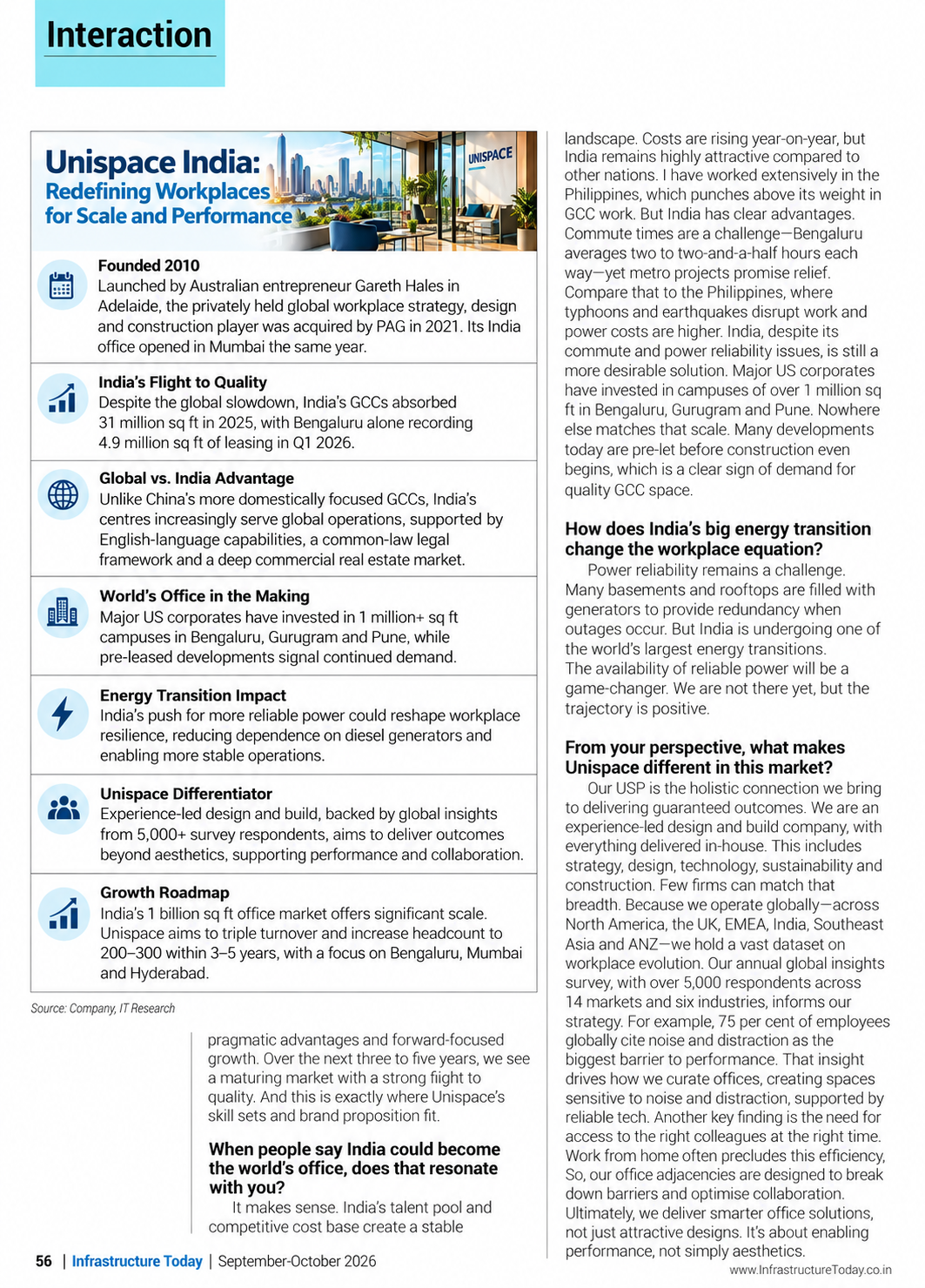
GCCs are becoming an increasingly important part of India's commercial real estate market. According to JLL figures cited by Paul, GCCs accounted for nearly 38% of India's office leasing in 2025, occupying approximately 31 million sq ft.
Bengaluru, Hyderabad, and Pune are attracting global businesses that need access to skilled professionals and facilities capable of supporting complex operations.
"India is no longer just a low-cost option, but a centre for unique, high-value workplaces," Paul told Infrastructure Today.
India's English-speaking workforce, established legal framework, and expanding commercial real estate market also make it attractive to international companies.
Infrastructure investment is improving connectivity in major cities, although long commute times and power reliability remain challenges. Paul expects continued investment and growing demand for quality office space to support the market's development over the next three to five years.
For corporate real estate leaders, this growth increases the need for workplaces that can support specialist teams, accommodate business expansion, and meet global operating standards.
Workplace performance starts with understanding how people work
As India's office market develops, employees are also changing what they expect from their workplaces.
Hybrid working has become established across many organizations, and younger employees are influencing how companies approach flexibility. Paul believes the office must provide a clear reason for people to come together.
Employees need spaces that support different activities throughout the day, from focused individual work to team discussions. Reliable technology and access to colleagues are equally important.
Unispace uses workplace research to understand these requirements and inform design decisions.
Our annual global insights survey draws on responses from more than 5,000 people across 14 markets and six industries. One finding highlighted by Paul is that 75% of employees globally identify noise and distraction as the biggest barrier to performance.
These insights help our teams plan workplace layouts, manage acoustic requirements, and position teams and shared facilities to support how people work.
We also consider how workplace design can make collaboration easier. Employees need access to the right colleagues at the right time, particularly when teams divide their time between home and the office.
For organizations investing in new workplaces, these decisions can influence employee experience, productivity, and the long-term value of their office space.
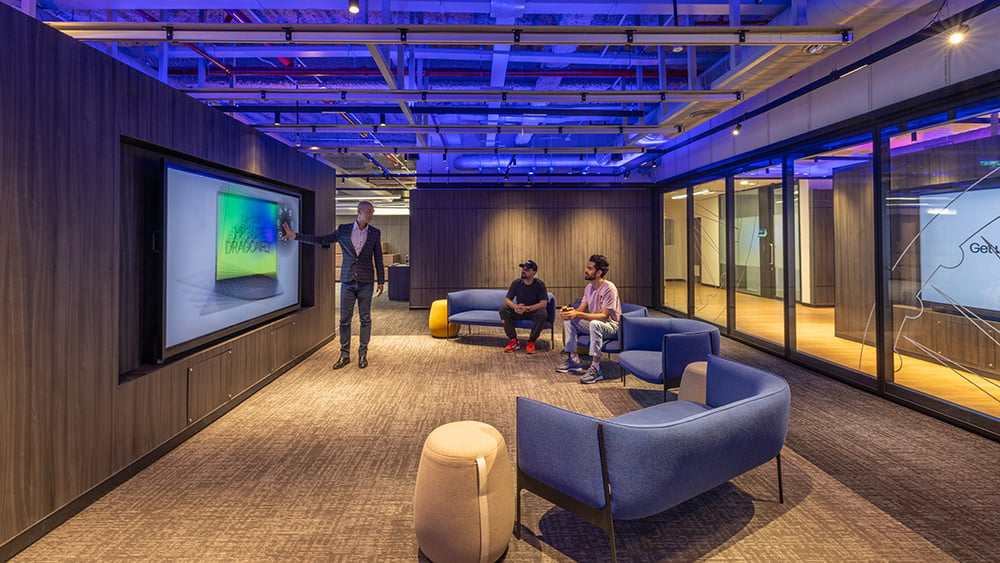 Employees need spaces that support different activities throughout the day (Project: HP, Inda)
Our integrated approach gives clients one accountable delivery partner
As demand for more complex workplaces grows, clients need greater certainty across strategy, design, technology, and construction.
Unispace brings these disciplines together through an integrated, experience-led design and build model.
Our teams work across North America, the UK, Europe, the Middle East, Africa, India, Southeast Asia, Australia, and New Zealand. This international presence gives us access to workplace data and project experience across different markets and industries.
We combine that knowledge with local expertise to develop solutions suited to each client's operational needs.
Our approach also connects workplace strategy with technical delivery. By managing these disciplines in-house, we can maintain accountability throughout the project and align design decisions with the intended workplace outcomes.
This is particularly relevant for global organizations expanding into India, where consistency across regional offices and the ability to deliver to international standards are important considerations.
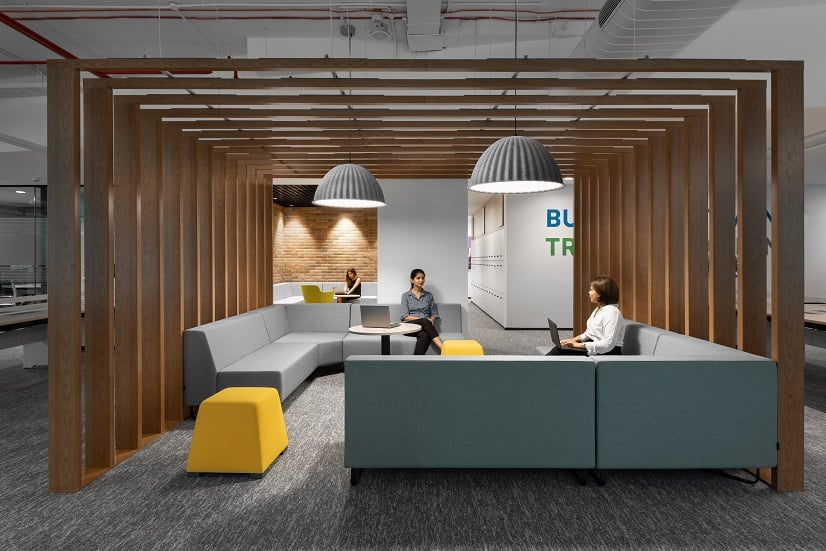
Unispace combines global expertise with local insight to deliver workplaces tailored to each market's needs (Project: Bottomline, Bangalore)
India plays a central role in Unispace's global operations
India's importance to Unispace extends beyond the projects we deliver for clients in the region.
Our shared service center in Mumbai supports our international operations. Located near the airport, it houses Accounts and Human Resources functions alongside a technical design team.
The center produces technical drawings and visualizations for global projects and supports the development of technology initiatives, including AI deployment.
This gives our global teams access to specialist capabilities in India while creating opportunities for local employees to contribute to international projects.
As Paul explained in the interview, India's talent pool supports Unispace's wider business strategy and provides capabilities that benefit clients across our global operations.
We are expanding our presence in Bengaluru, Mumbai, and Hyderabad
India is a priority growth market for Unispace.
At the time of the interview, our Bengaluru and Mumbai studios supported more than 600,000 sq ft of live projects, with a team of approximately 100 people.
We are also expanding our activities in Hyderabad, where we are delivering approximately 200,000 sq ft of projects.
Paul outlined plans to triple turnover and grow our India team to between 200 and 300 people over the next three to five years.
Our approach is to strengthen our presence in established markets rather than expand into every city. This allows our teams to concentrate resources and maintain consistent delivery standards while supporting clients in other locations through our core studios.
Attracting and retaining skilled employees is an important part of that plan.
We invest in understanding how our people want to develop their careers, with employee feedback informing training, professional development, and workplace culture. We also focus on recruiting people whose skills and expectations align with the business.
These priorities support our ability to build experienced teams and deliver consistent outcomes for clients.
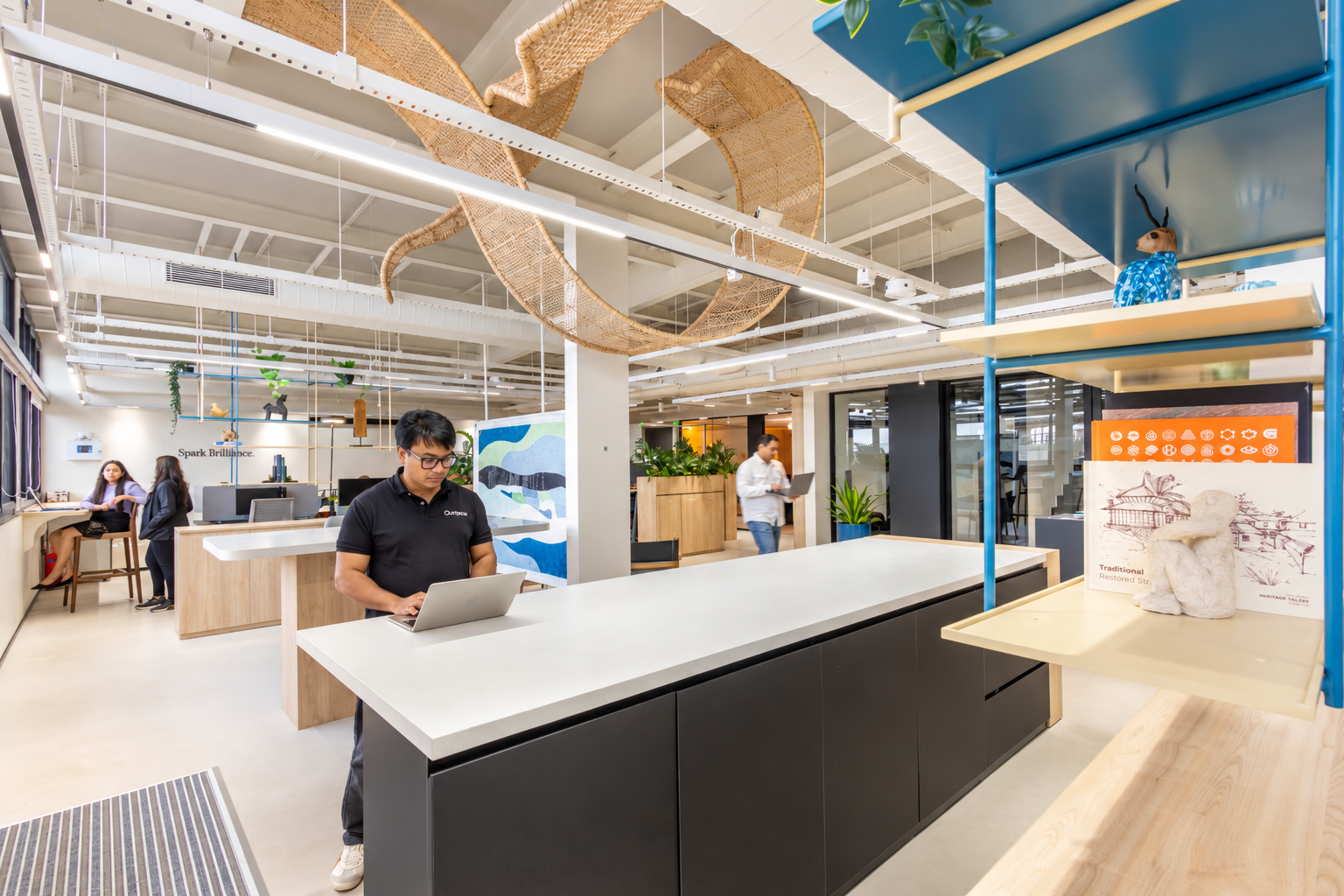 Unispace recently opened our new Bengaluru studio, strengthening our local presence and supporting our continued expansion in India (Project: Unispace Studio in Bangalore)
Life sciences and flexible offices are creating new opportunities
While GCCs account for a significant share of India's office market, other sectors are contributing to demand.
Managed and serviced office providers are expanding as businesses seek greater flexibility in how they occupy space.
Life sciences and pharmaceuticals are another area of growth. These sectors require specialized facilities that combine office environments with laboratories and technical infrastructure.
Unispace has extensive global experience integrating laboratory and office space, and Paul sees opportunities to apply this expertise as investment in India's life sciences sector increases.
These projects require close coordination between workplace design, technical systems, and construction delivery. Our integrated model allows teams to address these requirements together.
Energy reliability is another consideration for organizations operating in India. Many commercial buildings still depend on backup generators to maintain operations during power interruptions.
Paul expects India's ongoing energy transition to improve reliability over time, with potential benefits for workplace operations and resilience.
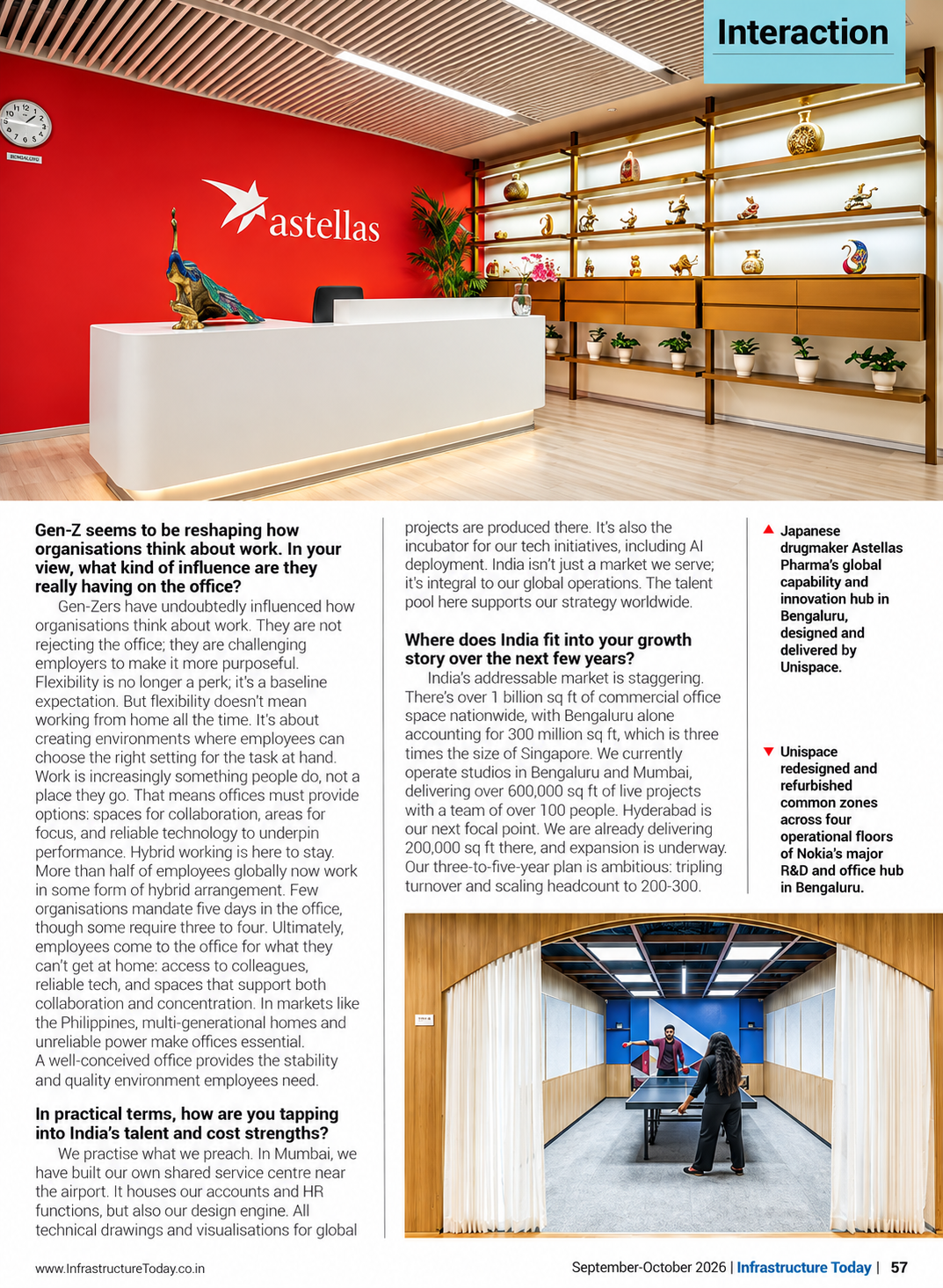
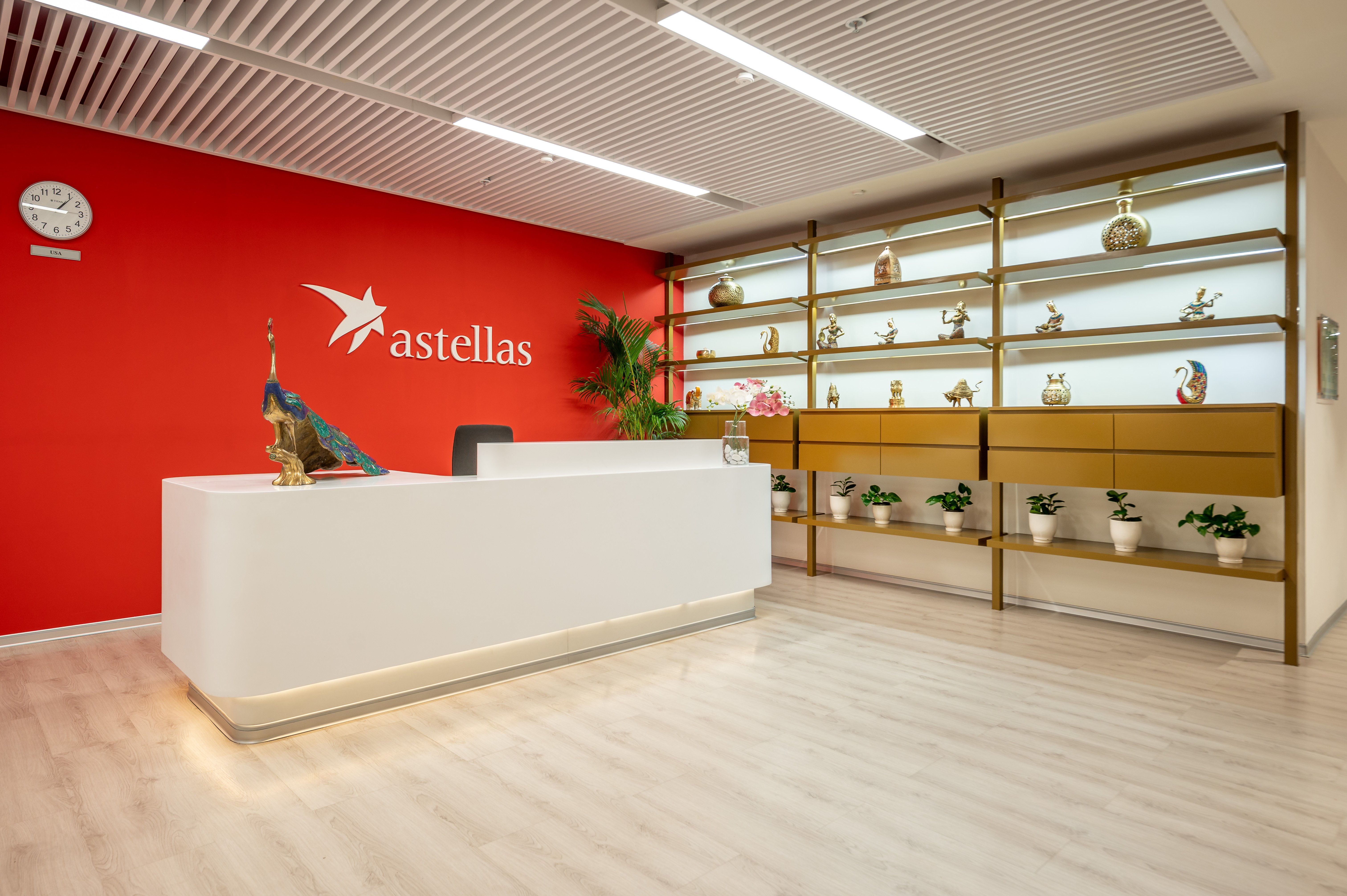 Unispace combines global expertise with local insight to deliver workplaces tailored to each market's needs (Project: Astellas Bangalore)
We see long-term opportunities to support India's workplace growth
India's commercial office market offers considerable scale. Paul cited more than 1 billion sq ft of office space nationwide, including approximately 300 million sq ft in Bengaluru alone.
As global businesses expand their operations, demand is increasing for workplaces that support specialist activities and changing employee needs.
For Unispace, the priority is to build on our established presence, develop our local capabilities, and support clients with consistent delivery across their workplace portfolios.
Our experience in strategy, design, technology, and construction gives us the ability to support projects ranging from corporate offices and GCCs to technically complex life sciences environments.
As Paul told Infrastructure Today, Unispace sees itself as a partner in India's development, helping global corporations and Indian enterprises create workplaces that support their people and business requirements.
This article is based on an interview with Paul Marshall, CEO, Asia at Unispace, conducted by Manish Pant, Consulting Editor of Infrastructure Today, and published in the September–October 2026 issue, pages 55–58.