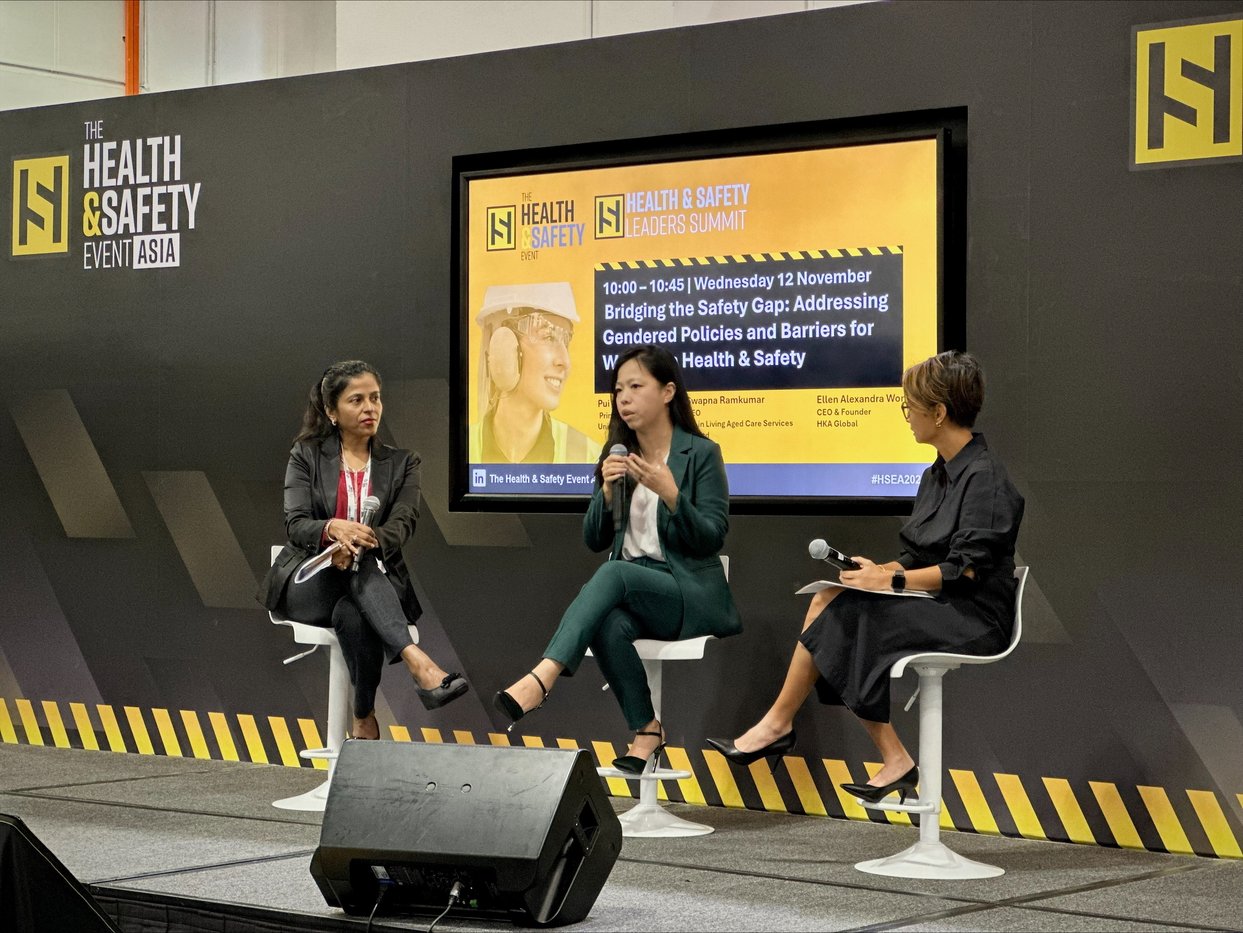
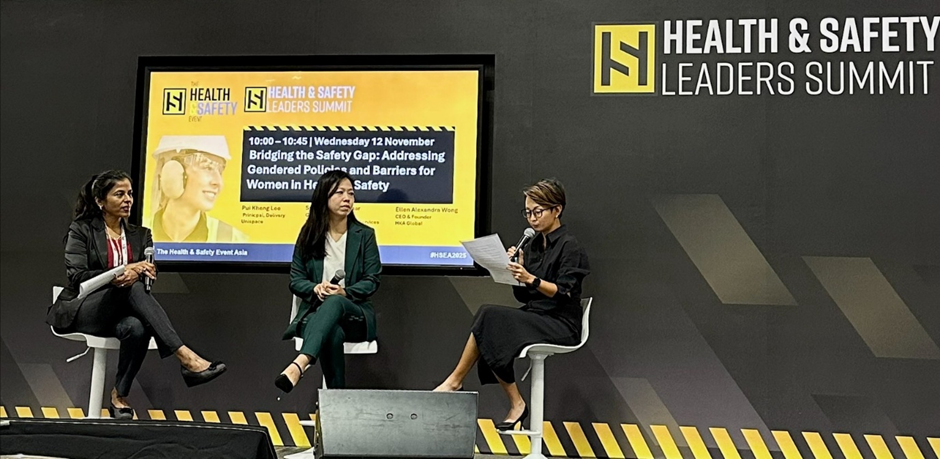
On 12 November 2025, PuiKheng Lee, Principal of Delivery, Asia at Unispace, joined industry experts at the Health & Safety Leaders Summit Asia at The Sands Expo & Convention Centre in Singapore.
Representing women in construction, Lee spoke on the panel “Bridging the safety gap – addressing gendered policies and barriers for women in health & safety,” alongside Dr. Swapna Dayandan, Chief Learning Adviser of the Singapore Leaders Network, and Ellen Wong, Associate Director of HKA Global.
Together, they explored how organisations can close gendered safety gaps and build inclusive, psychologically safe workplaces that empower everyone to thrive. Drawing on her delivery leadership experience across Asia, Lee shared six key insights from a construction and project delivery perspective.
Visible Gender-Specific Safety Gaps on Sites
The most visible gaps appear in equipment design, site culture, and task allocation. Many tools and personal protective equipment (PPE) are still designed for the average male physique, leaving women with poor fit and increased risk. Cultural assumptions about “men’s work” and “women’s work” limit exposure and participation, while a lack of female representation can mean women’s safety concerns go unheard.
Dismantling Protective Bias Without Compromising Safety
“Protective bias” — the idea that women must be shielded rather than supported, can unintentionally restrict opportunity. She advocates for inclusive design and capability-based policy, as well as representation and adapting the environment, rather than the individual. When equipment, training, and processes are designed for all body types and skill levels, safety improves for everyone.
Reducing Bias and Building Psychological Safety
Psychological safety grows when organisations create inclusive training, mentorship, and feedback systems. Women need visible safety leadership role models and assurance their feedback will be heard and acted on. Regular reviews of site policies and PPE help identify unintentional bias and ensure every worker feels equally safe, capable, and valued.
Impact of Collecting Gender-Specific Safety Data
Systematic gender-specific data collection drives better PPE design, fairer training, and more equitable task allocation. Over time, the data enables continuous improvement and accountability — reducing incident rates, strengthening engagement, and ensuring both women and men benefit from a safer, more inclusive workplace.
Gender-Intelligent Safety Leadership in Practice
Gender-intelligent leaders embed inclusion into every safety decision. They ask: “Does this tool, policy, or process fit everyone?” They invite diverse feedback, act on it, and hold themselves accountable. Inclusive leaders model respect on-site, build trust through listening, and ensure every voice shapes how safety is defined and delivered.
Leading Change for a Safer, More Inclusive Industry
Through her work at Unispace, PuiKheng continues to champion gender-intelligent safety leadership — ensuring construction and delivery environments are designed for everyone. Her participation alongside Dr. Swapna Dayandan and Ellen Wong underscores a shared belief: bridging gendered safety gaps isn’t just the right thing to do — it’s essential for smarter, stronger, and safer workplaces.
About Puikheng Lee, Principal of Delivery at Unispace Southeast Asia

Puikheng Lee is the Principal of Delivery at Unispace Southeast Asia, bringing over a decade of experience in project management and delivery across the region. She joined Unispace in 2019 and has since led the successful execution of complex workplace projects with a strong focus on quality, timelines, and client satisfaction.
Lee holds a Bachelor of Science in Project and Facilities Management from the National University of Singapore.
.jpg?width=383&height=348&name=C_240522_UNISPACE_ZOOM_site_setup_N11_webview%20(1).jpg)