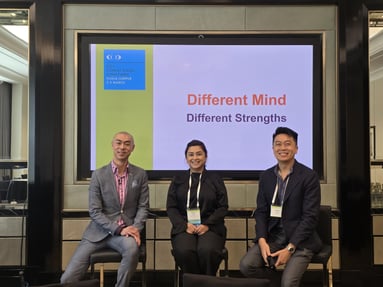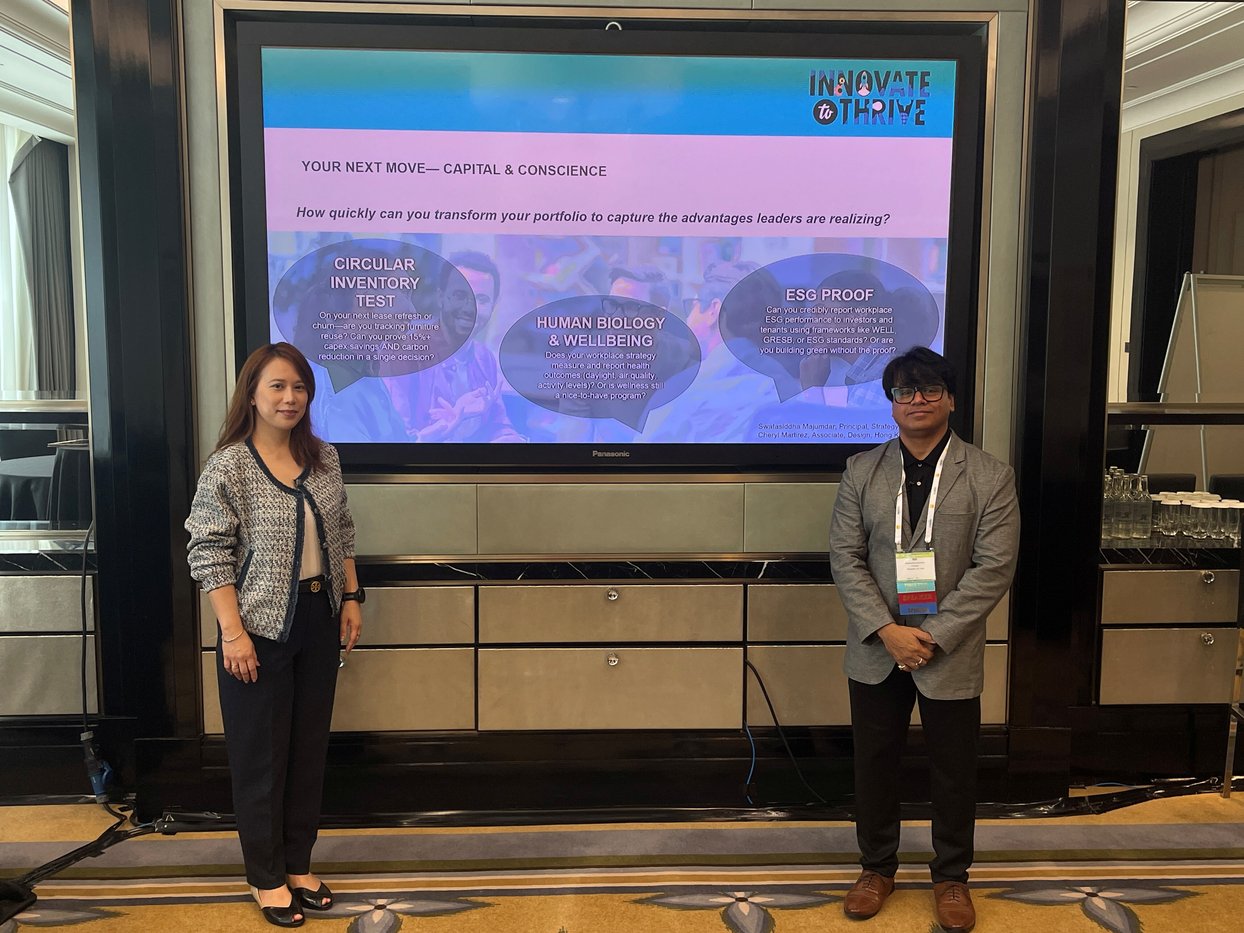
At the 2026 CoreNet Global Summit APAC, Swatasiddha Majumdar, Principal of Strategy at Unispace India, and Cheryl Martirez, Design Associate at Unispace Hong Kong, unpacked a defining shift in the property sector: ESG is no longer a parallel sustainability effort—it is a core growth strategy.
Three Key Takeaways:
- ESG has moved from ethics to economics. The market now prices conscience.
- Air, light, and nature measurably lift cognition—what’s good for people is good for portfolios.
- Green without proof is just ambition. Capital follows evidence.
The Market Has Split in Two
Real estate portfolios today are diverging along a clear fault line.
On the “green path,” certified assets command rental premiums of 9–24% across major Indian metros, record lower vacancy rates, and capture the majority of Grade A leasing activity.
Institutional investors are reinforcing the trend, with billions flowing into ESG-aligned assets and sustainable debt growing at record pace. Net-zero policies and GRESB thresholds are quickly becoming baseline expectations.
On the “brown path,” aging, non-compliant buildings face rising obsolescence and shrinking capital access.
As Swatasiddha emphasized, capital is no longer neutral—it is selective.
Tenants Are Driving Structural Change
The demand side tells the same story.
Today, 83% of occupiers are targeting 100% green portfolios by 2030—up from just 3% today. Sustainability decisions are increasingly made at the board level, with many tenants willing to pay a premium for certified space.
At the same time, supply remains constrained, creating a widening gap between demand for green buildings and available inventory. For landlords and developers, this is not simply an environmental decision—it is a revenue strategy.
Retrofit: The Untapped Opportunity
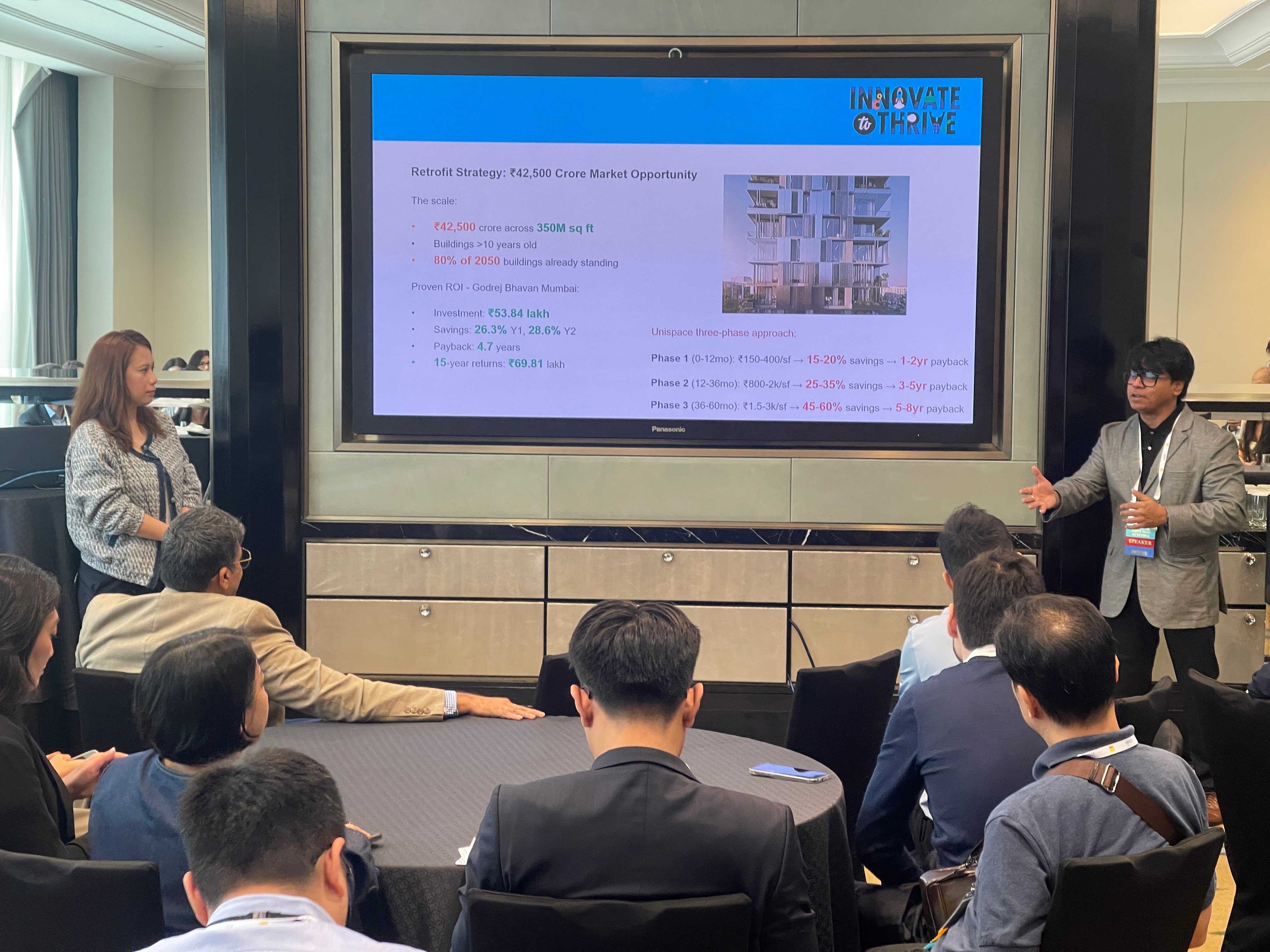
With 80% of 2050’s buildings already standing, retrofit is emerging as one of the biggest ESG value levers. India alone represents a ₹42,500 crore retrofit opportunity.
Phased upgrades—ranging from operational efficiencies to deeper system transformations—are delivering measurable savings, often with payback periods as short as one to three years. The narrative that sustainability costs more is being replaced by a new reality: sustainability performs.
Designing for Human Performance
Cheryl brought the conversation from capital markets to human biology.
Three everyday lease decisions can significantly shape ESG outcomes:
Circular inventory: Reusing furniture can reduce capex by 15% while cutting embodied carbon.
Daylight, biophilia, and air quality: Access to natural light reduces eye strain, biophilic design lowers stress levels, and improved air quality can boost cognitive performance by over 20%.
Proof and reporting: Aligning with frameworks like WELL and GRESB transforms sustainability from aspiration to investor-grade evidence.
This is where ESG shifts from “nice building” to competitive advantage.
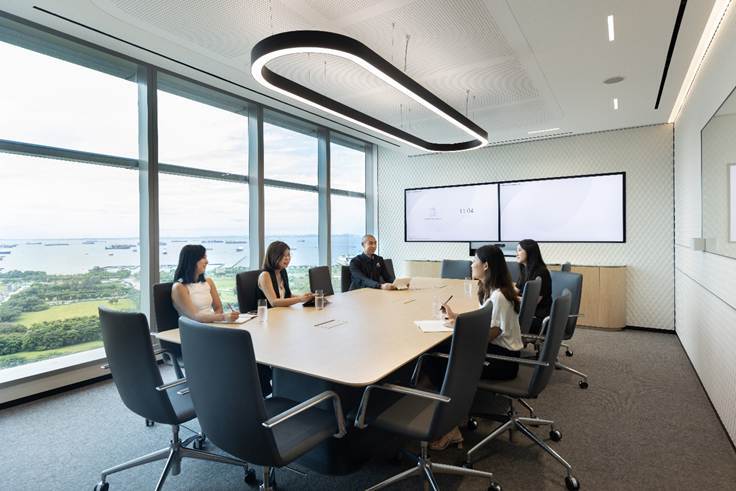 Natural light reduces eye strain, biophilic design lowers stress levels
The New ESG Equation
The takeaway from Swatasiddha and Cheryl was clear: the ESG premium is earned at the intersection of strategy, design, and governance.
- Investors want transparency.
- Tenants want performance.
- Employees want healthier spaces.
The portfolios that can prove all three will lead.
In today’s market, conscience isn’t a cost center—it’s a capital strategy.
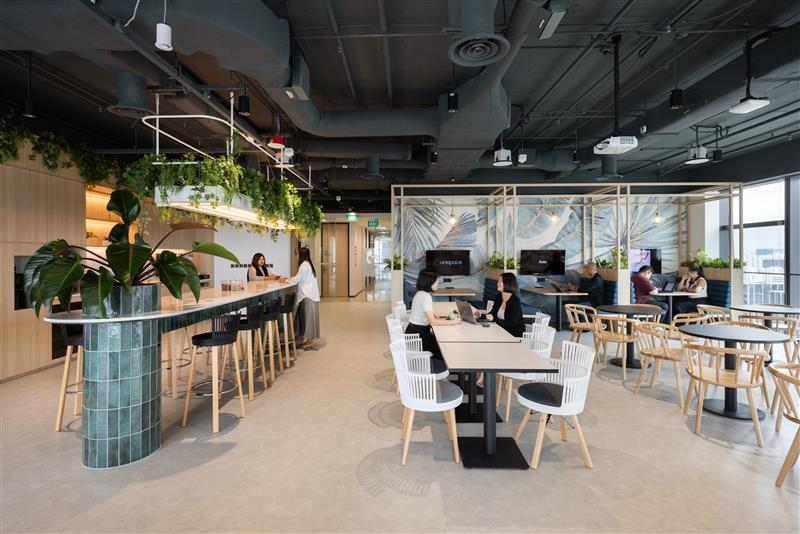 Sustainable buildings, healthy workplaces, and responsible investment attract and retain talent
About Cheryl Martirez
Cheryl Martirez joined Unispace as an Associate, Design, based in Hong Kong. She holds a Master’s in Design, specializing in Design Management & Practice and Sustainability in Interior Design, from The University of New South Wales, Australia.
A LEED and WELL-certified professional interior designer, Cheryl is also a certified ESG planner, bringing a strong sustainability focus to her design approach.
About Swatasiddha Majumdar
Swatasiddha Majumdar is the Principal, Strategy at Unispace India, a global design and build firm that specializes in workplace strategy, design, project management, and construction. With over two decades of professional experience, Swatasiddha leads the strategic initiatives at Unispace, where he focuses on architecture, workplace strategy, and project integration management.
He holds a Bachelor of Architecture and Planning from the Indian Institute of Technology, Roorkee (1996–2001), and a postgraduate qualification from the Advanced Programme in Product Marketing at the Indian Institute of Management Calcutta. He is currently pursuing his PhD at the Indian Institute of Technology Delhi, focusing on a Human–AI Collaboration Design Framework. He is also a Certified Strategy Professional and a Certified Professional Life Coach .