Looking Beyond Operational Energy in Sustainable Workplace Design
As sustainability goals become increasingly ambitious, the conversation is shifting beyond energy efficiency to address something often hidden in plain sight: embodied carbon.
While operational carbon refers to emissions generated during a building's use, embodied carbon encompasses emissions associated with the extraction, manufacturing, transportation, installation, maintenance, and disposal of building materials. In modern workplace fit-outs, embodied carbon can account for a significant portion of a project's lifetime carbon footprint, making thoughtful material selection more important than ever.
What is Embodied Carbon?
Every material has a carbon story before it reaches the site.
Examples include:
- Carbon emitted during steel and aluminum production
- Transportation of materials across regions
- Manufacturing of furniture, carpets, partitions, and finishes
- Construction and installation activities
- End-of-life disposal or replacement
As organizations pursue net-zero goals, reducing embodied carbon has become a key focus within sustainable workplace design.
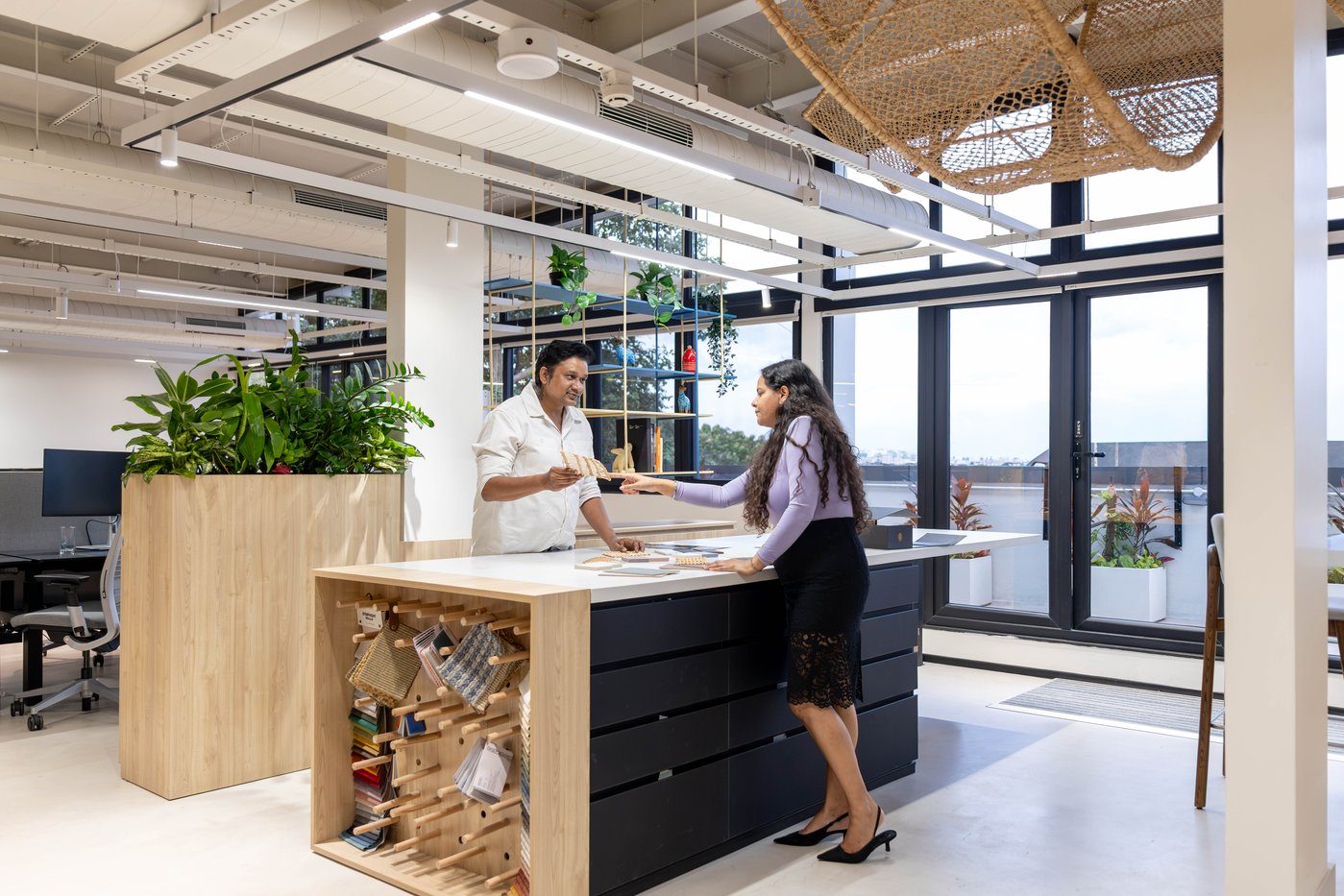
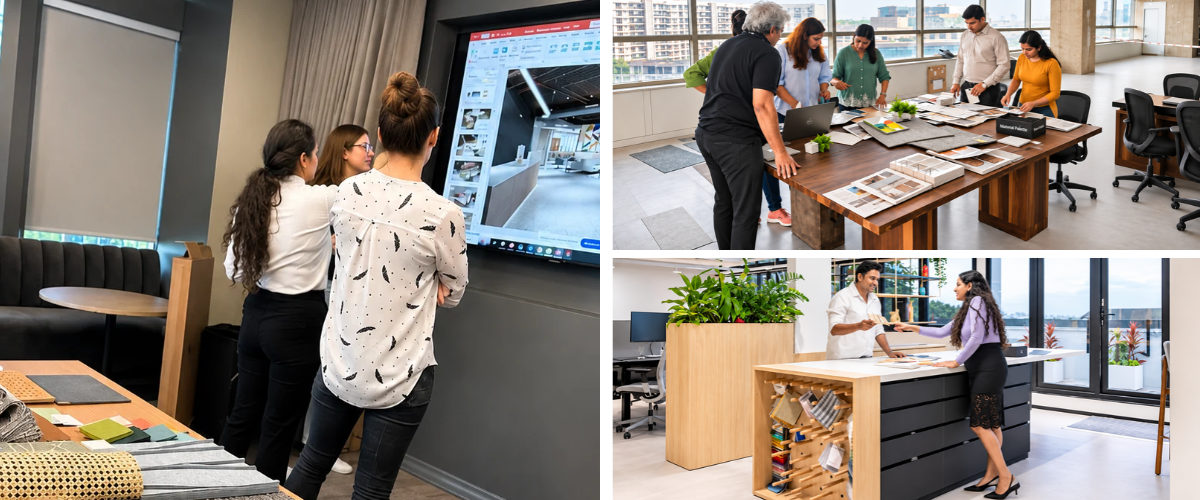 Our Bangalore team reviews finishes and material options on-site, demonstrating how thoughtful material selection can help reduce embodied carbon and contribute to more sustainable workplace design.
The Rise of Smart Materials
A growing number of manufacturers are developing materials that reduce environmental impact while maintaining performance, aesthetics, and durability.
Some examples include:
Low-Carbon Materials
- Low-carbon concrete alternatives
- Recycled steel and aluminum
- Engineered timber and rapidly renewable materials
Recycled and Circular Products
- Carpets made from recycled fishing nets and plastic waste
- Acoustic panels manufactured from recycled PET felt
- Furniture designed for disassembly and reuse
Healthier Materials
- Low-VOC paints, adhesives, and finishes
- Products free from harmful chemicals
- Materials supporting improved indoor air quality
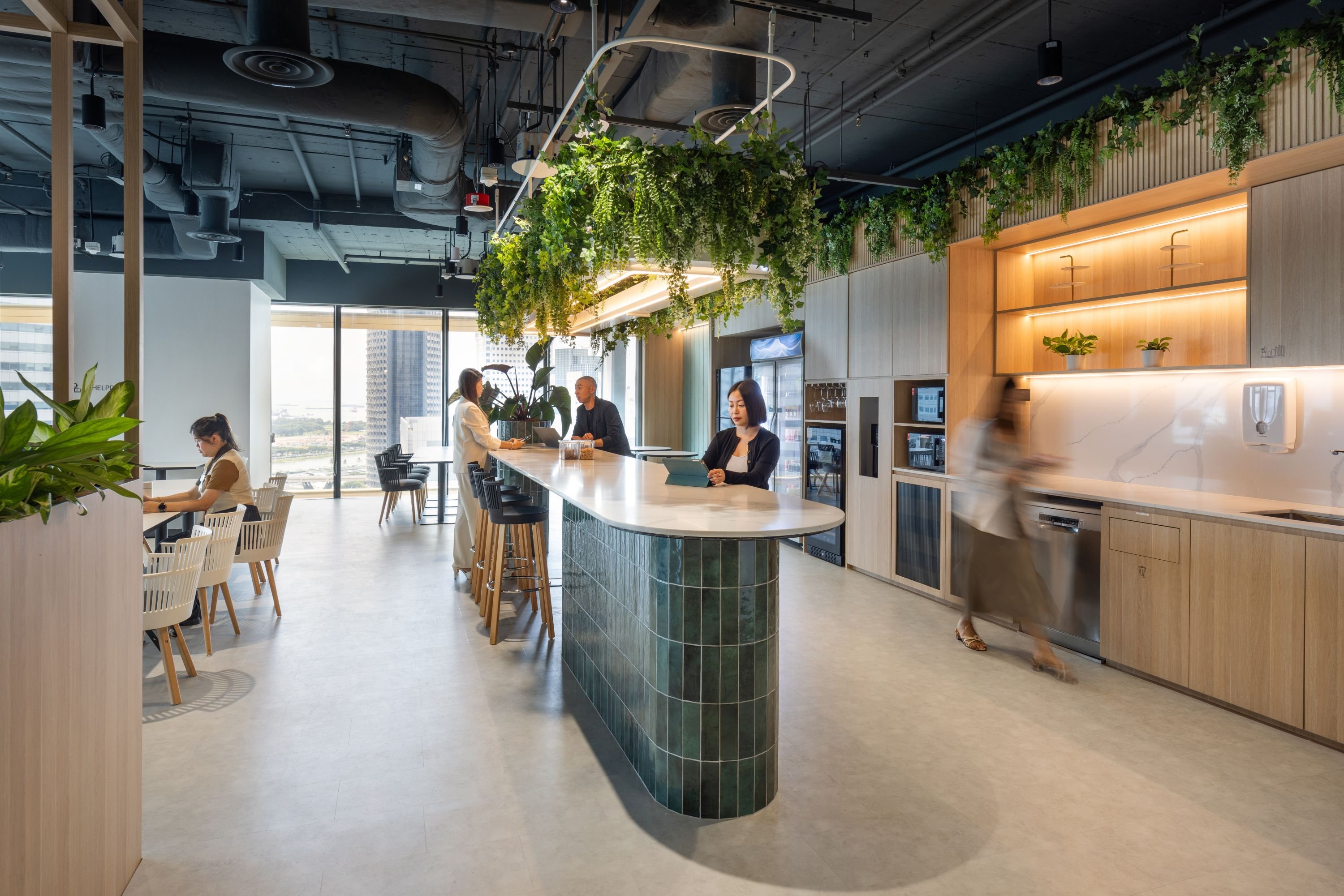
Smart materials bring together environmental responsibility, occupant wellbeing, and design quality to create healthier, more sustainable workplaces (A Singapore-based financial institution).
Connection to WELL and Sustainable Building Standards
Embodied carbon reduction complements several sustainability frameworks, including LEED, BREEAM, and emerging net-zero certification pathways.
From a wellness perspective, the WELL Building Standard emphasizes the use of healthier materials that support indoor environmental quality and occupant wellbeing. Material choices that reduce harmful emissions and improve indoor air quality can contribute to healthier workplaces while supporting broader environmental goals.
The result is a win-win approach: reduced environmental impact and improved occupant health.
How AI Is Transforming Material Selection
Traditionally, evaluating sustainable materials required extensive research across multiple suppliers, certifications, and Environmental Product Declarations (EPDs). Today, AI is helping designers make more informed decisions more efficiently.
AI-powered tools can:
- Compare embodied carbon data across different material options.
- Evaluate Environmental Product Declarations (EPDs).
- Identify lower-carbon alternatives while maintaining design intent.
- Forecast life cycle impacts and material replacement cycles.
- Support circular economy strategies by identifying reusable materials.
- Generate carbon reports to help project teams measure sustainability performance.
By transforming complex datasets into actionable insights, AI enables project teams to balance sustainability, cost, occupant wellbeing, and aesthetics more effectively.
Small Decisions, Big Impact
Reducing embodied carbon often involves hundreds of small decisions rather than a single major intervention. Reusing existing furniture, selecting locally sourced materials, extending product lifespans, and choosing products with recycled content can collectively deliver meaningful carbon reductions.
As workplace designers, we have an opportunity to make these decisions visible and measurable.
 Behind every material choice is a carbon story. Thoughtful material selection can significantly reduce embodied carbon while supporting workplace wellness.
Looking Ahead
The future of sustainable design lies in creating spaces that are not only energy-efficient but also mindful of the environmental impact of every material choice. By embracing smarter material specifications, circular design principles, and AI-enabled decision-making, organizations can significantly reduce their carbon footprints while creating healthier, high-performing workplaces.
About Cheryl Martirez

Cheryl Martirez joined Unispace as an Associate, Design, based in Hong Kong. She holds a Master Degree in Design, specializing in Design Management & Practice and Sustainability in Interior Design, from The University of New South Wales, Australia.
A LEED AP and WELL AP-certified professional interior designer, Cheryl is also a certified ESG planner, bringing a strong sustainability focus to her design approach.